

One of the things I probably do more often than people realise is body condition score my sheep.
It’s not particularly glamorous, it doesn’t require fancy equipment but once you get your eye, or more importantly your hands, in, it becomes one of the most useful tools for managing a flock.
With Valais Blacknose, I think it’s particularly important because let’s face it, there is a LOT of wool involved.
A big, fluffy Valais can look absolutely magnificent and still be carrying less condition than you might think. Equally, a sheep can look huge and impressive underneath all that fleece but actually be carrying plenty of fat.
That’s why I don’t rely on looking at them, I feel them.
What is body condition scoring in sheep?
Body condition scoring, or BCS, is essentially a way of assessing how much fat and muscle a sheep is carrying.
Sheep are normally scored on a scale of 1 to 5, with 1 being extremely thin and 5 being excessively fat. Most of the time, I’m looking for that middle ground where a sheep is carrying enough condition to support whatever stage of production she or he is at without becoming over-conditioned.
But I don’t think it’s helpful to get completely hung up on whether a sheep is exactly a 3 or a 3.5.
For me, some of the most useful information comes from looking at change. Which sheep are losing condition? Which are maintaining it? Which are putting it on?
When you condition score regularly, rather than as a one-off exercise, you start building a much more useful picture of what is happening within your flock.
Why I body condition score sheep throughout the year
A sheep’s nutritional requirements change enormously throughout the year, particularly for breeding ewes.
That’s why body condition scoring isn’t something I do once and then forget about. I check condition at different points throughout the year so I can make management decisions before there is a problem.
After lambing, for example, I want to know which girls have lost more condition than others and might need a bit of extra help.
At weaning, I can assess where they are and whether they have enough time to recover and recondition before tupping.
Before the rams go in, condition scoring becomes particularly important. I want ewes going into breeding in appropriate condition, rather than trying to play catch-up once tupping has already started.
Then there’s pregnancy and lactation, both of which place their own demands on the ewe. Keeping an eye on body condition helps me make sure I’m not asking too much of her without giving her the nutritional support she needs.
With my Valais, I specifically recommend assessing ewe condition at weaning, or at the latest around eight weeks before tupping.
Valais Blacknose are a large, relatively slow-maturing breed, so I want to give the girls plenty of time to recover and recondition after lambing rather than suddenly deciding a fortnight before the ram goes in that somebody needs feeding up.
By then, you’ve left yourself very little room to manoeuvre.
Body condition scoring isn’t just for the girls
The boys get checked too.
Rams need to be in good condition going into the breeding season because they have a job to do, and a fairly energetic one at that.
I want my rams fit and ready for tupping rather than carrying too much condition or going into the breeding season looking like they’ve just completed a particularly enthusiastic diet.
As with the ewes, I’m not looking at body condition scoring in isolation.
It’s one part of a much bigger picture that includes feet, teeth, general health, nutrition and how the sheep is actually performing.
A number on its own can only tell you so much. It’s when you combine it with everything else you know about that individual sheep that it becomes really useful.
Why I love body condition scoring after shearing
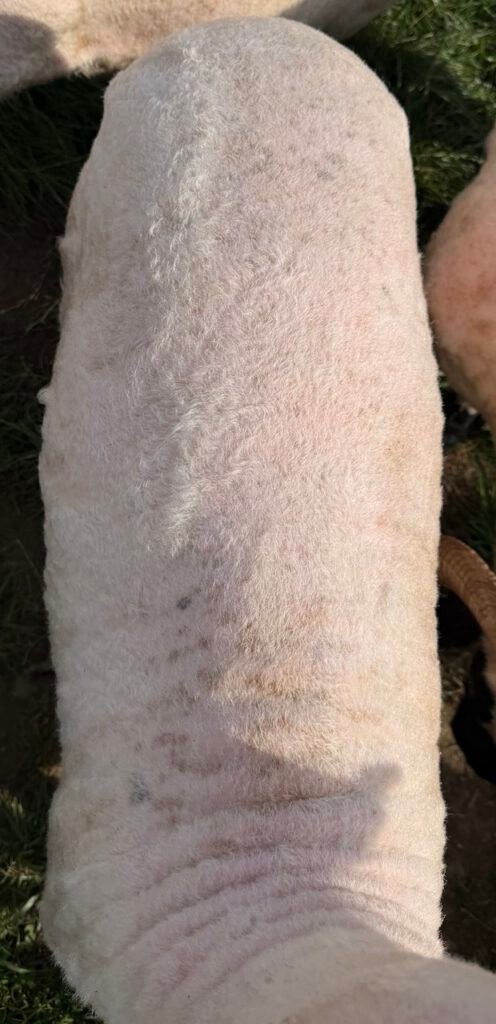
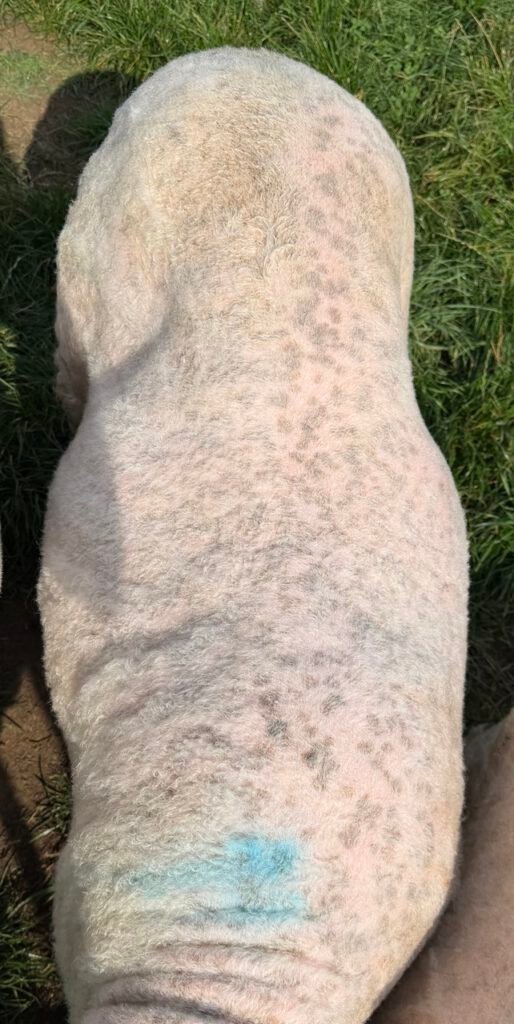
I particularly love checking condition after shearing. In fact, this is probably my favourite time to body condition score.
Because suddenly you can actually see what you’ve been feeling all year.
Valais Blacknose grow an enormous amount of fleece and are sheared twice a year. Once that fleece comes off, there is nowhere for anything to hide.
You can properly see the shape of the body. You can see the loin and the ribs.
And, most importantly, you can put your hands on them without having to fight your way through approximately six months’ worth of luxurious Valais wool.
For me, it’s a brilliant reality check.
Have I got my feeding right?
Have I maintained condition where I wanted to?
Which girls have used more reserves than expected?
Which ones have held their condition beautifully?
And which ones perhaps need a little more attention?
It’s also a chance to check whether what I thought I was feeling through all that wool was actually what was underneath it.
Sometimes you get it spot on. Sometimes the sheep you thought might be carrying loads of condition turns out to be absolutely fine. And occasionally, you get a surprise.
That’s part of the reason I find it so useful. You’re not relying on assumptions about what a sheep looks like. You’re checking what is actually there.
Body condition scoring is a management tool, not a beauty contest
One of the biggest benefits of regularly body condition scoring sheep is that it allows me to make decisions before a sheep becomes a problem.
If I wait until a ewe visibly looks thin, particularly underneath a Valais fleece, I’ve potentially missed weeks of useful information.
By handling her regularly, I can pick up a change in condition much earlier and adjust feeding or management accordingly.
It also means I can look at my flock as individuals rather than assuming every sheep needs exactly the same thing.
Because they don’t. Not every ewe has the same nutritional requirements, or loses condition at the same rate or responds to feed in exactly the same way.
One might come through lambing having maintained herself beautifully, while another has put absolutely everything into her lambs and needs more support to recover.
Regular scoring gives me a much clearer picture of what is happening within the flock and helps me make decisions based on the sheep standing in front of me, rather than simply treating them all the same.
How do you body condition score a sheep?
The basic principle is actually very simple.
When I’m body condition scoring a sheep, I’m feeling over the loin area, just behind the last long rib. I’m assessing the amount of muscle and fat covering the backbone and the ends of the short ribs. Rather than trying to judge condition from the overall size or appearance of the sheep, I’m using what I can feel underneath my hands.
And the more sheep you condition score, the better you become at recognising those differences.
It’s one of those practical skills where your hands eventually become much better at telling you what is happening than your eyes ever could.
That’s particularly true with Valais Blacknose.
Trying to assess condition visually through all that fleece is never going to give me the same information as actually putting my hands on the sheep.
Why I record body condition scores
I like to record scores too. A single body condition score gives me useful information about that sheep on that particular day, but recording scores over time is where things start to get really interesting as you begin to see patterns.
You might notice that a particular ewe regularly loses more condition during lactation. Another might hold her condition exceptionally well. You can compare where individual sheep were at weaning, before tupping and later in pregnancy.
Instead of relying on memory, I’ve got something I can actually look back on.
For me, that turns body condition scoring from a quick physical check into a genuinely useful flock management tool.
Shearing day tells me a lot more than how much wool they’ve grown
Shearing isn’t just about getting rid of that enormous Valais fleece. For me, it’s also an opportunity to stand back and take stock.
When the wool comes off and I see a flock carrying the condition I was aiming for, there’s a certain satisfaction in knowing all those little management decisions throughout the year have added up.
Of course, the sheep don’t particularly care about my carefully planned nutritional programme; they would probably tell you they were simply waiting patiently for more food.
But regular body condition scoring gives me another really useful tool to make sure I’m feeding and managing my sheep for health, fertility, longevity and performance, rather than simply feeding for a sheep that looks impressive underneath six inches of wool.
And with Valais Blacknose, sometimes you really do need to know what’s under the fluff.
If you’d like to learn more about how I manage, breed and care for my Valais Blacknose flock, have a look through the rest of the blog. And if you’re considering adding Valais Blacknose to your own flock, you can get in touch to find out more about my sheep and future availability.